2018 Lincoln Continental - Exterior Cover

2018 Lincoln Continental – Automotive Review

2018 Lincoln Continental - Exterior Cover

2018 Lincoln Continental – Automotive Review

While a majority of buyers have been leaning towards affordable sedans; especially while automakers have been packing more luxury options than ever before. This remains true, however, their still is a slice of the market for full luxury. Insert Lincoln Continental.

While sharing the basic undercarriage as the Ford Fusion, the Lincoln Continental from the bottom up has an unmatched look of its own. 

From its early beginnings of a one-off, personal vehicle for Ford Motor Company president Edsel Ford in 1939. The Continental has since become the flagship luxury sedan. First brought back into the limelight in 2015 at the New York Auto Show as a concept to replace the previous Lincoln MKS; after its long cancellation in 2002. The concept car was infamous for its comparisons to the Bentley Continental GT (and not just in name) and has become the basis for the production of the 2017 Ford Continental. 

Now a year older, the 2018 Lincoln Continental has remodeled its package from the previous year. Four previously optional packages are now standard on specific trim options. The trims being the Premier, Select, Reserve and Black Label. Blind-spot monitoring, rear cross-traffic alert, navigation, and SiriusXM Travel Link are now standard on the Select Trim. While the Black Label trim contains additional Technology package and Climate package accompanied with a panoramic sunroof. Within these packages are lane assist, adaptive cruise control, heads-up display, automated emergency braking, self-parking, automatic headlights and dimming mirrors, rain-sensing wipers, and heated seats throughout. All available models feature 4G LTE data connection with hotspot capability. As well as additional colors with some absurd names have been added: Iced Mocha, Ivory Pearl, Blue Diamond, and Rhapsody Blue. 

The engine base is a 2.7-litre twin-turbocharged V6. Capable of producing 355 horsepower, and 380 lb.-ft. Of torque. This comes with a fuel economy of 12.0L/100km combined highway and city driving. There’s also an optional 3.0L twin-turbo V6 for the top level trims exclusively. Pushing the horsepower and torque to an even 400 each respectively. The tested Continental was, in fact, the top level option, and the power was sufficient for its price-point, however as many have criticized; I would have liked to see a fuel-efficient option available. 

Smooth and seamless is what you would describe the overall drivability. Comfort mode seemed to be the more favorable option while driving. Typically in a luxury sedan, the suspension feels loose to begin with and then with the additional comfort mode, most vehicles feel too loose. This wasn’t what I experienced in the Lincoln Continental under comfort mode. Moreover, the sport mode felt redundant. The increase in noise from the exhaust, high revolutions, and stiffness isn’t the purpose of this vehicle. 

Now I touched on the appearance drawing comparisons to Bentley’s styling; which when it made its debut in 2015, Bentley stated it was in fact a copy.

                       “Finally a ‘Bentley for the masses’ though…”

                                       -Bentley designer Luc Donckerwolke

To me, I wouldn’t say it’s a copy more so an ode. There are only so many design options, some are bound to be similar. Lincoln went with what they felt best represented true luxury. In order to obtain one of the more roomy cabin spaces, the length of the Continentals dimensions exceeds its competitors. Measuring at 201.4 inches in length and 78 inches wide, the Continental is at least 6 inches longer and 4 inches wider than its Audi, BMW, and Genesis counterparts. Their are just the right amount of chrome around the vehicle and the door handles are located distinguishably integrated the window sills is an amazing idea. They seemingly unlock under minimal pressure and almost just pop open. While closing features a soft close to the door as the mechanism clinched the latch closed automatically. This sounds like an unnecessary feature, but it’s unbelievably satisfying and extravagant. Almost reminiscent of a doorman at an exclusive hotel. The rear-end has one of the very few horizontal-style tail lights I find appealing. This may be due to the fact it’s slimmer than most and parallels an elegant chrome Lincoln embroidery. 

When it comes to the interior of the Continental, rear-seated passengers were part of the focus, not a side piece. While all in all, the entire cabin was extremely spacious and comfortable thanks to the excessive size throughout. It seemed, however, that design elements were an afterthought. With a mixture of wood grain, aluminum, chrome, and some plastic; Lincoln loses some of its sophistication here. With the Climate package, passengers get to enjoy heated seats entirely, rear audio control, and even massage and recline capability. Luxury treatment is also available for the front seats in the form of an all-new 30-way-adjustable Perfect Position. The transmission shifter remains a button system, also seen in the Ford Fusion. I hate this. There’s something unpleasantly unnatural about pushing a button for reverse. Ironically making me feel uncomfortable driving an otherwise extremely comfortable vehicle. 

Key Features:

  • Strating at $56 650
  • 7L twin-turbocharged V6
  • 335 horsepower, 380 lb.-ft. torque
  • 30-way-adjustable Perfect Position
  • 19″ Premium Painted Aluminum


Share on facebook
Share on google
Share on twitter
Share on print
Share on email
Automotive Reviews

2018 Lexus IS 350 – Automotive Review

2018 Lexus IS 350 – Automotive Review

The 2018 Lexus IS 350 is a perfect example of Lexus’s commitment to today’s newest generation of luxury buyers. Already a strong player in the entry luxury segment, the IS 350 offers drivers a balance of power and handling with a more unique and eccentric Japanese styling. Aggressive lines and angles that stand out from the more common and traditional European luxury sedans.

The IS lineup is produced in the Tahara Toyota Motor plant, which is one of the most computerized and robotized automotive plants in the world. The plant is spread out over four million square meters, and it even has direct port access for more efficient international shipping. The Lexus brand represents the pinnacle of the already well-respected Toyota brand, with track like performance added to the top of the line quality and reliability expected from the company often quoted as the inventor of many of today’s manufacturing processes and standards.

Test driving the Lexus IS 350, was quite enjoyable. It was exciting and responsive which helped bring some joy to what is normally a dreary commute. Our car came with the F Sport package, which included some further refinement in styling such as the dark mesh front grill and larger and more functional brake cooling ducts. The interior was also heightened with some sportier vented and heated front seats, a 3-spoke steering wheel, and fancy aluminum brake and gas pedals. The 10.3 display is controlled by the annoying Lexus Remote Touch input, while the haptic feedback was nice, I found myself continually overshooting the chosen icon and having to fiddle with it more than I would have liked too. The available 15-speaker Mark Levinson® Surround Sound Audio system provided home theater like quality, and the IS 350 includes all the features expected from a luxury sedan. The F Sport package also included some performance features like Sport S/S+ modes providing faster gear changes, with reduced body roll through Adaptive Variable Suspension (AVS) damping the force of the shock absorbers.

The Lexus IS 350 is powered by a 3.5L V6 producing 311 hp and 280 lb.-ft. of peak torque. The AWD models use a six-speed automatic transmission where the RWD model uses an eight-speed Sport Direct Shift automatic transmission. While this is plenty of power for the average daily drive, at this price point on paper the IS 350 does fall behind some of its direct competitors. 

Competition – Entry Level Performance Luxury (50-60k)

  • INFINITI Q50 Red Sport 400
    • Producing 400-hp from a 3.0-litre V6 capable of doing 0-100km/hr in 4.5sec
  • BMW 340i xDrive
    • Producing 320hp from a 3.0-litre V6 capable of doing 0-100km/hr in 4.9sec
  • Cadillac ATS Premium Luxury
    • With a 3.6L V6 335 hp engine capable of doing 0-100km/hr in 5.6 sec

Key Features:

  • Starting from $53,100 CND
  • 3.5L V6 with 311hp and 277lb-ft
  • 12.3/9.1/10.9 city hwy combined
  • Lexus Safety System Plus+
  • Heated and Air-Conditioned Front Sport Seats
  • Dimensions
    • Height 1430mm.
    • Length 4680mm.
    • Width 1810mm.
    • Gross Vehicle Weight 2125 Kg.
    • Cargo Capacity 306L.
Share on facebook
Share on google
Share on twitter
Share on print
Share on email
Automotive Reviews

2018 Nissan 370Z NISMO – Automotive Review

2018 Nissan 370Z NISMO – Automotive Review

Nissan 370Z is a back to basics sports car that puts serious yet affordable driving fun above everything else. At the top of Nissan's 370Z line is the NISMO, which provides access to straight-from-the-factory street and track performance inspired vehicles. With things such as the standard with 6-speed manual transmission and NISMO-tuned suspension, the 2018 Nissan 370Z NISMO is race-proven engineering at an attainable price point.

Main Changes for 2018

  • Dunlop SP Sport MAXX GT600 high-performance tires
    • Same tread pattern as the Nissan GT-R
  • EXEDY® L-PEC high- performance clutch

Key Features:

  • Nissan 307Z NISMO starting at $48,298 CAD
  • GT-R-inspired functional and fully integrated aerodynamic body pieces
    • 0 inches longer and 1.0 inch wider than a standard 370Z Coupe
  • Three exterior colors are offered: Solid Red, Pearl White, and Magnetic Black.
  • Standard Advanced Active Noise Cancellation (ANC) and Active Sound Enhancement (ASE) systems
  • 7-litre DOHC V6 engine with Variable Valve Event and Lift Control (VVEL)
    • 350 hp @ 7,400 rpm
      • 18 horsepower more than a standard 370Z Coupe
    • and 276 lb-ft of torque @ 5,200 rpm
  • Close-ratio 6-speed manual transmission with standard SynchroRev Match
  • Fuel Economy
    • Combined 11.5L/100km
Share on facebook
Share on google
Share on twitter
Share on print
Share on email
Automotive Reviews Video

2018 BMW 440i – Automotive Review

2018 BMW 440i – Automotive Review

The 2018 BMW 440i, a unique blend of sportiness and elegance, that can be built to suit the demands of even the pickiest consumer.

2018 brings a refreshing update to the 4 series line-up, which was first introduced in September 2013. With a notably wider stance and longer wheelbase than its predecessor, the BMW 4 series is available as a Coupé, Convertible, and a 4-door Gran Coupé.

“The maxim guiding the BMW 4 Series model update was ‘stick to the proven formula but add extra richness to the cars’ character’. That’s why the exterior design shines the spotlight most brightly on the dynamic and elegant qualities of the BMW 4 Series family”

                  -Domagoj Dukec, Head of Exterior Design BMW Automobiles.

Major Updates Include:

  • Restyled nose, keeping with the broad muscular almost bulldog BMW styling.
  • Larger central air intake that increases in size toward the exterior edges
  • Similar front headlights but now new bi-LED headlights as standard, with available Icon II full-LED adaptive headlights
  • Elongated design of the rear end with everything focusing on giving the impression of the car sitting wider, lower and having an enhanced muscular look
  • The rear LED lights are no longer divided into individual lights but are given a more cohesive look that tapers off towards the center.
  • Signal indicators take up more space, and the inner section of each rear light is now used for signaling as well

Exterior

New exterior paint finishes have been made available for the 2018 BMW 4-series. The first is called Snapper Rocks Blue Metallic, which is a new shade of turquoise, and the second is called Sunset Orange which is a burnt orangey-red color.

Interior

The interior of the BMW 440i was everything you would expect from a luxury import vehicle. With extra fine materials used throughout, the refresher for 2018 had only minor improvements like the finishes added to the air outlets, and the controls on the door panel. However, when sitting in this car you can tell there was an army of engineers who were tasked with ensuring maximum functionality of even the smallest unnoticeable details. Also new to 2018 is some additional interior colors, such as Midnight Blue, Cognac, and Ivory White, all complete with coordinated contrast stitching and piping. We tested the BMW 440i convertible in the new Snapper Rocks Blue mixed with the White Dakota leather interior, and it looked like the car was straight from Miami Vice. I swear the creamy white interior was getting dirt marks on it from just looking in the same direction as the car.

Driving

The 4 series has a lower center of gravity and a wider\longer wheelbase compared to the 3 series. Combine that with the stiffer M sports suspension with advanced damping technology and an upgraded steering set-up, the 440i drove more like a sporty coupe compares to a full sized 4-door sedan. All the engine options for the 4 series are from the latest modular BMW EfficientDynamics family and include the BMW TwinPower Turbo. The inline 6 found in the 440i coupe generates 320 hp and has an average combined fuel consumption rate of 9.6 l/100km. These engines are mated to a standard eight-speed Steptronic Sport Automatic transmission, with an available six-speed manual gearbox for no-cost only on the BMW 4 Series Coupé.

Technology & Safety

Redesigned iDrive 6.0 infotainment system

  • Highlights include:
    • New main menu structure with configurable tiles featuring live content.
    • Intelligent Voice Control system including Natural Language Understanding.
    • Automatic over-the-air map updates up to 4x annually.

Key Features:

  • Pricing
    • 440i Coupé starting at $56,850 CND
    • 440i xDrive Gran Coupé starting at $57,550 CND
    • 440i xDrive Cabriolet starting at $71,050 CND
  • Power
    • Acceleration 0-100 km/h in 4.9s (440i xDrive Coupé)
    • 320hp & 330 ft-lb of torque (440i xDrive Coupé)
  • Fuel
    • Combined in 9.6l/100 km (440i Coupé)
    • Combined in 9.6l/100 km (440i Grand Coupé)
    • Combined in 10.2l/100 km (440i Cabriolet)
Share on facebook
Share on google
Share on twitter
Share on print
Share on email
Automotive Reviews

2018 Mazda6 – Automotive Review

2018 Mazda6 – Automotive Review

With a slogan of “Driving Matters”, Mazda has produced a juggernaut sedan that’s a leader in its class. While most North American consumers are leaning towards SUV’s and Crossovers, it hasn’t stopped Mazda from quietly outperforming its competition in the sedan market.

While it may not get the recognition it deserves, the secret is out that Mazda isn’t going to be taken lightly. The all-new Mazda6 has been loaded with upgrades from its previous year, as well as continuing with previously unmatched features throughout.

Mazda6 has been given some improved chassis refinement to enhance its already superb drivability. Complimenting the handling with a slight increase in power. New to the Mazda6 is a 250 horsepower-2.5L turbocharged 4-cylinder engine. Paired with its automatic six-speed transmission, with seamless shifting capability and virtual zero turbo lag; the Mazda 6’s power is more than adequate.

Already possessing one of the more elegant cabins compared to its counterparts. It was shocking to know that, aside from the steering wheel and minor trim pieces; the cabin of the Mazda6 is completely remodeled. Whoever said “if it ain’t broke, don’t fix it” obviously didn’t design this Mazda. However, this does follow the strategy Mazda outlined of pursuing constant updates and improvements on a much more frequent basis compared to the standard refresh and remodel schedule. The new horizontal dashboard provides a more sophisticated look and is easier on the eyes. A thin strip of satin chrome cascades around the cabin elevating the look even further. None of that cheap plastic on the dashboard downgrading its luxury feel. The entertainment module is also less clunky than most, but the rotary controller can take some getting used to, leading to many frustrating involuntary actions by mis-selecting through overshooting the appropriate icon. A seating upgrade is also a new addition for 2018 as well as gaining an inch of display on the navigation screen (previously 7 inches). Which every man can agree upon, you have to make every inch count.

The 2018 Mazda6 introduces various trim levels to satisfy everyone’s price range. Starting with the standard GS model at $27,000. The 187 horsepower 2.5L engine in the GS is partnered with standard features and a fabric interior. Stepping up from there we have the $31,600 GS-L. The GS-L has the same engine configuration but gains premium features such as; leather seating, moonroof, and iActivsense safety controls. The iActivsense safety gives the driver increased safety functions like collision warning, lane departure, and pedestrian alert sensors. I personally recommend the $2000 powertrain upgrade which will grant you a turbocharged boost to the 2.5L engine. Conversely, at $35,800, the GT model will come with the turbocharged, 250 horsepower engine, as well as features like premium Bose audio system, heads-up display, auto-dimming mirrors, and some signature lighting for the cabin. Dipping into the more luxurious credential is a new thing for this Mazda Sedan, with the all-new signature passage for the Mazda6. Special trims for the interior and exterior come with the signature package like; A luxurious Nappa leather upgrade for the seats, a beautiful real satin wood trim, ultra-suede dashboard, a 360-degree monitor, and parking sensors come with the $38,800 top of the line Mazda6.

Changes to the suspension geometry have improved the dynamic handling of the Mazda6’s drivability. Electric steering which has been growing in popularity has been added to assist in maneuvering. I found that the power and acceleration were adequate and it didn’t suffer any of the turbo lag that can easily ruin any driving experience. The transmission automatically responds smoothly and seamlessly. However, the manual six-speed transmission was removed from production in Canada, leaving some drivers slightly disappointed.

For those willing to appreciate innovative design, affordable luxury, and comfortable drivability the Mazda6 delivers on all fronts. These Japanese automakers have made aggressive steps towards putting the competition in its rearview mirror. When you are looking for your next sedan, Mazda has to be included on your list.

Key Features

  • Starting at $27,000 CND
  • Third update to the Mazda6
  • SKYACTIV-G 2.5L Engine with optional Dynamic turbo
    • 187hp @ 6,000 rpm
    • 186 ft-lbs torque @ 4,000 rpm
  • 9.1L/100Km City & 6.7L/100Km Highway
  • Cargo volume 416L
  • Full Color 8” touchscreen display
  • Mazda’s unlimited mileage warranty
Share on facebook
Share on google
Share on twitter
Share on print
Share on email
Automotive Reviews
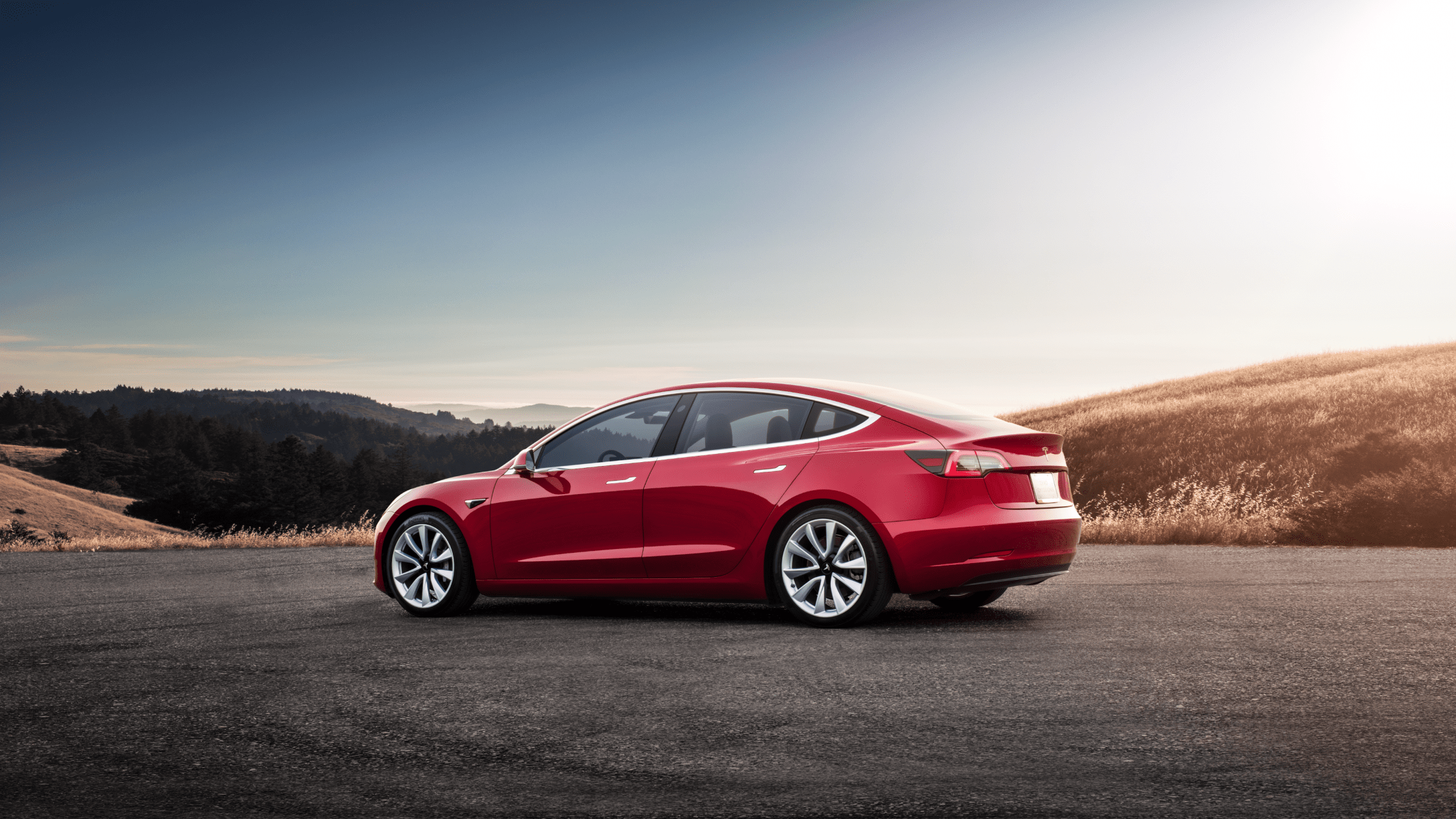
Model 3 Performance - Red Front Motion

2018 Tesla Model 3 – Automotive Review

Model 3 Performance - Red Front Motion
Chris Jud

Chris Jud

2018 Tesla Model 3 – Automotive Review

More than 2 years ago, on an early morning in downtown Vancouver, my dream of owning a Tesla 3 got to a very slow start.

Waiting in the queue for more than 2 hours amongst other car enthusiasts, I could feel a certain carnival-like atmosphere. It brought me back to a similar experience I had, one where I had waited patiently at a glowing new Apple store for a chance to be among the very first to own an iPhone which was released about a decade ago in 2008. Waiting to enter the Tesla Sales Office, many smart vendors were approaching the queue to offer things like electric docking stations for faster home charging and memberships to special electric vehicle clubs. Finally, I entered the holy grail – a Tesla Sales office and was greeted by a friendly person who helped to take my reservation and a small $1000 deposit.  At this time, while all this was happening across the country, there wasn’t even a picture of the car available yet, as Elon Musk was set to reveal the car to the world a mere 10 hours later. The only possibility to jump to the front of the proverbial queue was to go to an official Tesla location and take this leap of faith.

In the end, this rather bold move enabled me to get production number 30,063 from the worldwide Tesla 3 deliveries. Having a number from this early on in production means it was probably produced during the time when Elon Musk was known for sleeping on the factory floor and would often take personal control of assembling Model 3’s. I can probably claim that our car may have even been produced by the extraordinary man himself.

During those long last few years, you may have read in the news about all the endless delays in production and even a few scary stories about potential quality issues. I regularly got a few sniggering remarks like: “your car is probably being built in a tent” or “Will you get your car this year at all?”  and “hopefully you can get your car before the company goes bust”.

That all changed when a Tesla representative based in Las Vegas, USA contacted us in early July of 2018 and announced that our car has arrived at the Tesla delivery center recently set up in the Kitsilano area of Vancouver B.C. So, on July 9th, 2018 the day had finally arrived where I could take possession after fully paying my dues of a brand new shiny red Tesla 3.  At the time of ordering our Tesla 3 was customized with a multitude of options including; an extended battery (not that I need it but it makes it go faster!), fully panoramic glass roof (which helps make the neighbors envious), 19” tires and special rims (the standard issues are dead ugly) and an improved sound system (what’s the point driving in near silence if you cannot fully appreciate the nuanced performance of Luciano Pavarotti or Lady Gaga).

One special incident at delivery must be mentioned: Each and every representative of this still young and rather unique company was very friendly and took every possible effort to make our experience a memorable event. However, when one extra chirpy employee told us: “Welcome to the family!” suddenly it felt a bit like I was joining a cult…

Now to the question which might interest you most: How is it to drive? Naturally, you would think that I’m biased, but I even took the risk of letting my friend and neighbor do a test drive and asked his wife to inspect and comment on the interior. Both results were positive, and they both mentioned how this is clearly the future of the automotive industry, and I’m pretty sure I heard them walking away muttering something about high gas prices and the possibility of self-driving.. I really like the balanced handling, rapid acceleration and the overall driving experience (in near silence). The interior with its unique single central display will take some getting used to – but like the Apple iPhone in 2008, this car represents the first taste of what’s to come.

Key Features

  • 0-60 mph in 3.5 seconds (Performance Option)
  • Optional Dual Motor AWD
  • 500 km on a single charge (Long Range Option)
  • Standard with advanced hardware capable of providing Enhanced Autopilot features today, and full self-driving capabilities in the future
  • All driver controls/information on the central 15-inch touchscreen
  • Car updates over-the-air via Wi-Fi & cellular
  • Currently starting at $64,100 CND
Share on facebook
Share on google
Share on twitter
Share on print
Share on email
Automotive Reviews Experiences
2018 Jaguar F-Type SVR - Exterior Side

2018 Jaguar F-Type SVR – Automotive Review

2018 Jaguar F-Type SVR - Exterior Side

2018 Jaguar F-Type SVR – Automotive Review

We had a thrilling adventure experiencing this new 2018 Jaguar F-type SVR. It was only fitting that we would have the opportunity to review this beast in the setting of historic Langley Speedway.

Hosting numerous races up until its closure in 1984, we thought we would relive some of the tracks former glory by unleashing the menacing 575-horsepower V8 supercharged Jaguar F-Type fully equipped with all the technologies expected of the SVR badge. Now while this Jaguar was more than capable of screaming down some fresh new asphalt at a furious pace, the now-retired Langley track is more suitable for walking your dog, over racing a cat. However, the 2018 Jaguar F-type SVR literally screams, with the assistance of Active Exhaust,® button located inside the cockpit, you are able to release at any speed a race-car inspired crescendo that was once so prominent at his now historic site.

Whether it’s gliding through the tight corners of the track or cruising through the city, the handling is magnificent. The use of the double wishbone aluminum suspension and the Electric Powered Assist Steering (EPAS) enables you to tame the amount of power effortlessly around corners. Throughout testing, I was able to conclude that dynamic mode was very relative to the throttle and circumstances. Maneuvering through a corner at an increased pace, you can feel the technology take control, preventing understeer and improving handling. This is in large part to the technology added inside the F-pace’s core. The torque vectoring provides independent brake control to the inside wheels while the Electronic Active Differential® delivers the torque to the rear wheels when exiting the corner. The jaw-dropping stature of the brake calipers is one thing, but the functionality is another. It’s the most powerful brake system available from Jaguar and just adds to the high class of performance for this F-Type SVR

The stunning retro sky blue, accompanied by a plethora of carbon fiber accents demands your attention at every turn. Our first impression was one of excitement and awe, and we are sure it will catch your eye too in with our cinematic review of this 2018 Jaguar F-Type SVR.

Share on facebook
Share on google
Share on twitter
Share on print
Share on email
Automotive Reviews Video
2018 Honda Civic Type R - Exterior

2018 Honda Civic Type R – Review

2018 Honda Civic Type R - Exterior

2018 Honda Civic Type R – Review

In the automotive industry, they rarely make fun cars anymore. The markets are understandably catered to family vehicles, fuel efficiency, or luxury. The Honda Civic Type R isn’t going to necessarily fit any of those needs. The Civic Type R is just one of those fun cars.

This radical Civic looks like it received a Fast and the Furious: Tokyo Drift makeover. Honda has fulfilled a successful front-drive formula. This is evident when the Civic Type R smashed the front-wheel-drive production-car lap record at the esteemed Nürburgring. Impressively this upgraded Civic lapped the 12.9 mile course in 7:43.80; the next closest came 3.39 seconds behind (Volkswagen Golf GTI Clubsport S).  Credit not only goes to the tremendous power infused into the Type R, but the complete tuning into the suspension and frame. The over the top styling may be a little to in your face that some might love or hate, the drivability is unquestionable.

A running joke amongst Honda Civic drivers is the VTECH® system. For many years Civic drivers have comically thanked there VTECH® for the improved efficiency of their four stroke engine as well as the ability to reach 100km/hr after a couple minutes. Well, this Honda Civic Type R is no joke. Propelled by a direct injected, 16 valve VTECH®, 2.0L turbocharged four-cylinder engine producing a whopping 306 horsepower and 295LB-ft of torque this Civic is something drivers can actually brag about. The transmission is a short-throw manual six-speed with rev-match control. Feeding the front wheels without losing traction through its limited-slip differential. The rev-match control enhances the manual experience by automatically optimizing the engine revs to match the desired gear for smooth transitions. Three drive modes (Comfort, Sport, R+) will adjust these settings, the adaptive damper system, alter steering and tune the throttle response.

The styling is an acquired taste that I’m still trying to swallow. There are some aspects I absolutely love, and others that I feel like are too much. I’ll start with the interior. First thing you notice is the unique bucket seats, double stitched in red suede allowing you to become one with the car and providing a stable and comfortable setting. Accompanying the red theme scattered throughout is the solid aluminum additions to the shift knob, and pedals. A particular personal serial number plate is also located next to the gearshift, allowing proud Civic owners to belong to the limited edition club. Moving to the exterior, you will notice the winged spoiler and body kit. While the functional winged additions provided major credit for the aerodynamics behind the record setting lap time, the demeanor of this Civic seems too overdone. Triple center exhaust, badging and 20” aluminum-alloy wheels are all excellent features that capture the spirit of a performance Honda.

When a daily commuter vehicle can set a track record as well as get you to work on time, which is nothing short of incredible. You will first notice the tremendous acceleration and smooth grip handling. Do yourself a favor and flip the toggle to R+ in order to truly drive this car how it was intended. When the gauge turns an aggressive red, a more advanced rev matching kicks in for effortless shifting. The handling is equally impressive. Tight gripping around the hardest corners is tremendous and comfortable. The low profile tires and stance however, isn’t desirable on the rougher terrains and major bumps. Honda had also slapped on some Brembo® high-performance four piston calipers with heart stopping technology are made for stopping on a dime. In test results the Type R substantially stopped 15 feet less than its Golf and Focus RS rival.

Finally Honda Civic fans can rejoice with an actual factory modified Civic they can brag about.

Key Features:

  • Starting $41,090
  • 2.0-litre, Direct injection, 16 valve VTECH®, turbocharged 4-cyclinder
  • 306 Horsepower and 295lb.ft Torque
  • 6/100km City and 8.3/100km Highway
Share on facebook
Share on google
Share on twitter
Share on print
Share on email
Automotive Reviews
2018 Lincoln MKZ - Exterior Blue Diamond Side

2018 Lincoln MKZ – Review

2018 Lincoln MKZ - Exterior Blue Diamond Side

2018 Lincoln MKZ – Review

Reintroduced in 2016, the Lincoln MKZ is Ford's attempt at chipping away market share from the German and Japanese leaders in the luxury sedan market. With what is essentially a prettied-up Ford Fusion the MKZ show its worth by the quality of materials and workmanship found all over the vehicle.

The powerful new turbo V6 with 400hp provides the Lincoln MKZ with a chance of gaining a foothold, not with your grandpa, but a newer younger generation looking to enter the luxury sports market.

The 2018 MKZ design is impressive when you think about it. Lincoln was able to take your everyday Fusion, use it as a base, and with just some minor changes fill it with sleekness and swagger. The wider more aggressive front grill gives a nod to it Jaguar cousin, with full double ring adaptive LED headlights and cleaner front lip sure help the MKZ stand out. Additional features such as the retractable panoramic glass roof and 19” aluminum wheels, is showing Ford refinement at some of the highest levels.  I thought the approach detection was a nice touch and was impressed to see things like the Lincoln welcome mat. That level of elevation a few years ago would have only been seen in vehicles well above the price of a fully loaded MKZ. The beauty of the design of this vehicle is that it looks good as a 4-door sedan, it’s not trying to look sporty, and it doesn’t need to be a coupe. Instead, this car is more of a sportscar in a suit.

That sportscar comes in the form of the 3.0L twin-turbocharged V6 producing 400hp and 400ft-lbs of torque. Which with the weight it must carry might the MKZ will not break records or seem nimble or agile when driving but will certainly provide you with enough acceleration for an exciting drive in both the city and on the highway. For contrast, the similarly priced Mercedes C43 has only 362 hp and the more expensive 320hp in the BMW 440i. The powertrain on the 2018 Lincoln MKZ Reserve is more impressive in raw numbers even when comparing it to its distant cousin all done out with 380 hp on the 3.0L supercharged Jaguar XE S, which starts at quite a bit more at around $61,500 CND.

All of this refinement is continued throughout the interior and in the technology available for the MKZ. Starting with the available 2.0L iVCT Atkinson I-4 Hybrid Engine, giving you the option to lose the sports car, but get an impressive 5.7L/100km in the city, while keeping all of the luxury and class. Or in things like Active Noise Control, which utilizes technology similar to noise canceling headphones, reducing unwanted cabin noise. One feature that was hard for me to get used to during the test drive was the location of their push-button transmission system. Having to push a button near the radio for Park was odd and I kept reaching down hoping for a familiar knob, dial, lever or button where the cup holder was.

Key Features:

  • Starting at
    • Select $40,550 CND
    • 3.0L Reserve $50,100 CND
    • Hybrid Reserve $45,950 CND
  • Available 3.0L twin-turbocharged engine producing 400 horsepower and 400 ft-lbs torque
  • Twenty speakers on the available Revel® Ultima® System and 14 on the Revel Audio System
  • Standard 11.8/8.4L/100KM City and Highway
Share on facebook
Share on google
Share on twitter
Share on print
Share on email
Automotive Reviews
2018 Hyundai IONIQ Exterior

2018 Hyundai Ioniq – Review

2018 Hyundai IONIQ Exterior

2018 Hyundai Ioniq – Review

While the Automotive Industry boasts loudest about its unique outliers, there is something to be said about a vehicle like the Hyundai IONIQ that most accurately satisfies the true requirements of transportation, which is to safely and cost-effectively go from point A to B.

Hyundai is making a name for themselves in the green vehicle space with their impressive IONIQ. Going up against powerhouses like the Toyota Prius, Ford C-Max, and the Chevy Volt, the Hyundai IONIQ smashes expectations and offers more trims and options than all the others combined. Establishing a strong market presence with this product line makes sense for Hyundai from both a long and short-term perspective. As this industry must adapt to external pressures such as the rising price of fuel, and a need to switch from the individual consumer to the demands of larger business accounts like ridesharing and autonomous driving fleets.

As we start seeing more of our test vehicles being hybrid or electric it has gotten us really thinking about the importance of how these vehicles work with our current lifestyle, our needs, and the infrastructures we have in place to support them. Starting at only $24,299 CND for the hybrid and going up to $35,649 CND for the all-electric model shows the importance of selecting the vehicle that will best represent your driving needs. Having the opportunity to test both the fully electric and the electric plus IONIQ really showed us how one size does not fit all.

In the end, for us, we were not as comfortable driving without having the familiarity of gasoline as a backup. That’s not to say we couldn’t see the value in the all-electric option, and easily can envision what that driver might look like. I’m sure the ideal candidate would live in a more urban setting with shorter commute times and increased access to rapid charging stations or they might be a more senior member of society who just needs to do errands around town, and is on a more fixed income unable to adjust to rising fuel costs. However, in our situation living in the far outskirts of Vancouver and having to commute all over the valley brought up challenges we felt that the IONIQ Electric Plus was more equipped to handle compared to the just electric option. For example, after a day of driving with a few hours on the road, our poor battery would be completely drained and we would be just starting to dip into the reserve gasoline system, but this was okay as the alternative was to be stuck on the road without any power or a charger in sight…(which almost happened to one of our writers)

The fuel savings alone was enough to make our team pause in interest. With the amount of driving, we do an even moderately fuel-efficient vehicle will easily be $50 a week with today’s record gas prices in Vancouver. With the Hyundai IONIQ Electric Plus, we barely put $20 in for the whole two-week test drive, due to being able to plug the vehicle in each night and start each day fresh with a full battery. So regardless of our feelings on how comfortable we are to changing and using this technology, from an environmental and economic standpoint, it is getting increasingly ridiculous to think that we will keep using fossil fuels when the alternatives are right in front of our face.

Key Features:

  • Starting at $24,299 CND
  • Electric 200 km on a single charge
    • Charging times: 24hours @ 120v, 4.5hours @ 240v, 35 mins @480v
  • Electric Plus 47Km on electric power then 4.1L/100Km Hybrid
    • Charging times: To be Announced @ 120v, 2.25hours @ 240v
  • Hybrid 1000Km on a single tank of gas (Best-in-class 4.1L/100Km combined fuel efficiency)
  • 5-year/100,000 Km Comprehensive Limited Warranty
  • 8 YEAR/160,000 Km Hybrid and Plug-in Hybrid System
Share on facebook
Share on google
Share on twitter
Share on print
Share on email
Automotive Reviews